

India’s widest range of sectoral funds
A variety of catalogue to choose form

List of sectoral mutual funds
All about sectoral funds
- Sectoral mutual funds are designed to track the performance of specific industries within the broader equity market. Unlike diversified funds, they concentrate on a single sector, such as banking, technology, healthcare or infrastructure. This is often indicative of how that segment of the economy is evolving. Their returns tend to move in line with sector-specific developments, policy changes and business cycles.
Due to their focused approach, sectoral funds tend to show sharper phases of growth and correction. Understanding how these funds work and the role sectors play within market movements helps investors read trends more clearly and interpret portfolio performance with greater context.

-
What are sectoral mutual funds?
- Sectoral MFs are equity-oriented schemes that invest primarily in companies belonging to a specific sector of the economy, such as banking, technology, healthcare or infrastructure. Unlike diversified equity funds, these funds concentrate on a single theme, which means their performance is closely linked to how that sector evolves over time.
Returns are influenced by industry cycles, policy developments and broader economic conditions affecting the sector. Their strategic, narrow approach means sectoral mutual funds tend to show higher volatility, moving sharply during periods of growth as well as slowdown within the chosen sector.

Sectoral Funds - Features & Benefits
An Index Fund is a type of mutual fund or exchange-traded fund (ETF) that aims to track the performance of an underlying index such as Nifty 50 Index, Nifty 500 Index and S&P 500 Index with same portfolio in terms of companies and their weights. These funds offer broad market exposure, at low cost and generally have low portfolio turnover.



Types of Sectoral mutual funds
Sector mutual funds are classified by the industries they represent, with each type reflecting the performance and challenges of a specific segment of the economy. Their returns are shaped by sector cycles, policy changes and shifts in demand. These are some common types of sector funds:
Banking and Financial Services Funds
Track banks, NBFCs and insurers, influenced by interest rates, credit demand and regulatory conditions.
Information Technology Funds
Focus on software and technology companies, with performance linked to global demand, currency movements and digital adoption.
Pharmaceutical and Healthcare Funds
These funds focus on healthcare providers and drug manufacturers, shaped by research outcomes, regulations and healthcare spending.
Infrastructure and Capital Goods Funds
Reflect construction, engineering and manufacturing activity, often aligned with economic growth cycles.
Energy and Power Funds
Cover oil, gas, utilities and renewables, driven by commodity prices and energy policy.
How do sectoral funds work?
Sectoral funds in India invest mainly in companies from a single industry or theme such as banking, technology, or pharmaceuticals. Fund managers select stocks based on fundamentals, valuations, and market conditions.
Because exposure is limited to one sector, performance closely follows that industry’s cycle. Returns can rise with favourable policies or demand but may fall during slowdowns or regulatory pressures. These funds are actively managed, with portfolio weights adjusted as sector dynamics change.


Things to consider before investing in Sectoral mutual funds
Sectoral mutual funds follow a focused approach, making it important to evaluate them more carefully than diversified funds. Their performance is closely linked to how a specific industry evolves over time, and this can vary across market cycles.
Sector maturity and cycle
A few sectors are cyclical, while others are driven by long-term structural trends.
Concentration risk
Limited diversification means higher sensitivity to sector-specific events.
Volatility levels
Returns can fluctuate sharply depending on policy changes, demand shifts or global factors.
Investment horizon
Patience is needed for sectoral funds during periods of underperformance.
Portfolio alignment
Exposure should be viewed in the context of overall asset allocation.
Fund strategy
You can get clarity on risk exposure by understanding how the portfolio is constructed.
Our Funds
Related Articles
-
Article
- 10 min read
- August 30, 2024
-
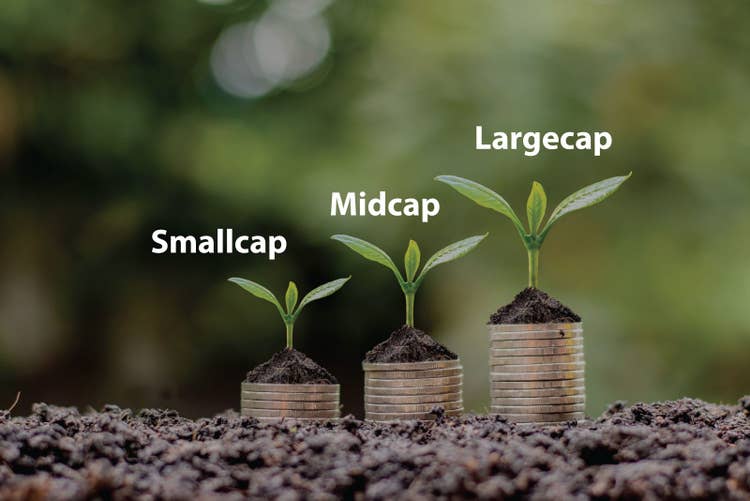
Large-cap Stocks, Small-cap Stocks, Mid-cap Stocks — What is the difference?
-
There are thousands of companies in the Indian stock market. There are about 2,113 companies listed on the NSE and 5,311 companies listed on the BSE.

-
Video
- 3 min watch
- April 4, 2022
-
5 Reason to Boost your SIP
-
As we all agree, it is not possible to time the market, and therefore a Systematic Investment Plan (or SIP) is a preferred mode of investment to invest in mutual funds.

-
Podcast
- 1 min listen
- October 4, 2021
-
Ep. 00: Introduction
-
Welcome to the Equity Sahi Hai podcast brought to you by Motilal Oswal Asset Management Company. Equities have the potential to deliver inflation-beating returns for your portfolio.
Frequently Asked Questions
Are index funds suitable for beginners?
Do index funds guarantee returns?
Are index funds suitable for long-term goals?
What are the expected returns of index funds?
Do index funds pay dividends?
How much should I invest in index funds?
How do Motilal Oswal index funds work?
Why should you invest in Motilal Oswal index funds?
What are the basic requirements to invest in Motilal Oswal index funds?
How are index funds different from actively managed mutual funds, ETFs and stocks?
What are exit loads and how are they levied on index funds?
What is the minimum investment both in lumpsum and SIP?
Source: AceMF. Widest range in terms of tracking Domestic and International equities as on February 29, 2024. Additionally, ETFs and Fund of Funds are also available. Commodities and Passive multi-assets are Fund of Funds investing in underlying schemes.
Mutual Fund investments are subject to market risks, read all scheme related documents carefully