-
-
-
Compound Interest Calculator
- Compounding allows earnings to generate additional earnings over time.
-
Principal Amount
100000
1000
10000000
Time Period
5
1
30
Rate of Interest (p.a)
12
2
13
Compound Frequency
-
- Yearly
- yearly
-
- Half-Yearly
- halfyearly
-
- Quarterly
- quarterly
-
- Monthly
- monthly
- Total wealth accumulated
- 3473745
- #9DADFE
- Invested Amount
- 1200000
- #4338F3
- Returns Value
- 2273745
- Clearly shows how wealth grows faster as the investment horizon increases. It highlights why starting early can be more effective than investing larger amounts later.
Disclaimer
- This calculator is provided for informational purposes only.
- The results are based on user inputs and should not be considered as investment advice. Users should seek the advice of a qualified financial professional before making any investment decisions.
- The creators of the calculator and its affiliates shall not be held responsible for any financial losses resulting from the use of the calculator.
- Past performance may or may not be sustained in the future and should not be used as a basis for comparison with other investments. Mutual Fund Investments are subject to market risks, read all scheme related documents carefully.
People are also investing in
Other Calculators
- SIP Top Up Calculator
- Lumpsum Calculator
- SIP Past Performance Calculator
- Compound Interest Calculator
-
-
- Try our Goal Calculator
- Target a certain amount of wealth within a time frame before the beginning of their investment journey.
Compound Interest Calculator
- Money can grow when invested wisely and given enough time. One of the most powerful concepts behind long-term wealth creation is compounding. Yet many investors struggle to understand how their returns accumulate over the years. This is where a Compound Interest Calculator becomes useful. It helps you estimate how your investment may grow based on the rate of return, investment period and contribution amount. Whether you are planning for retirement, a child’s education or general savings, understanding compounding can make financial outcomes clearer and more measurable.
What is a Compound Interest Calculator?
- A Compound Interest Calculator helps in estimating the future value of an investment by factoring in compounding. You don’t need to do any manual calculations as the calculator quickly shows how your principal amount grows over time when interest is earned not only on the initial amount but also on the accumulated interest.
- Also known as a CI Calculator, compounding calculator or Compound Interest rate Calculator, this tool is widely used by investors to project returns across different timeperiods and rates of return.
What is Compound Interest?
- Compound interest means you earn returns not just on the money you initially invest, but also on the returns that build up along the way. With compounding, each time interest is added, your total investment grows and the next round of returns is calculated on this higher amount.
How Does Compound Interest Work?
- Compound interest adds earned interest back to the principal amount at regular intervals. Once the interest is added, the next round of interest is calculated on this new total.
- How frequently the interest is compounded, such as yearly, half-yearly or monthly, also influences the final value. The more frequent interest is compounded the higher the accumulated returns will be.
How Can a Compound Interest Calculator Help You?
- A compound interest calculator online makes complex calculations simple and gives a quick estimate of potential returns. You can use it to compare different investment durations, rates of return and contribution amounts. By using this tool your financial planning can be more structured and transparent.
- The Motilal Oswal Compound Interest Calculator has a user-friendly interface where you can experiment with multiple scenarios. Whether you want to calculate compound interest for a lump sum or evaluate periodic investments, it provides a clear projection of growth. By using the calculator, you can visualise how staying invested for longer periods can influence outcomes.
How to Use Motilal Oswal Compound Interest Calculator
Follow these steps to use the Motilal Oswal CI Calculator:
- Enter the principal amount.
- Enter the expected rate of return.
- Choose the investment duration. Depending on the tool’s options, you may also choose the compounding frequency.
After the values are entered, the calculator displays the estimated future value and total interest earned.
For investors evaluating mutual funds, the tool can also be used as a mutual fund compounding calculator, showing how systematic or lump sum investments could grow over time. The results are presented instantly, making it easier to review different investment scenarios.
How Does a Compound Interest Calculator Work?
A compounding calculator applies the standard compound interest formula to the inputs provided by the user. It determines how the principal grows over time when interest is added periodically, with the help of mathematical calculations.
The following are the four main inputs:
- Principal amount
- Interest rate
- Duration
- Frequency of Compounding
After these four inputs are entered, the calculator processes them using the compound interest formula. The principal is multiplied by a factor that includes the interest rate and the number of compounding periods.
For example, if you compound interest annually, the formula applies once a year. If it is monthly, the annual rate is divided by 12 and applied each month. This increases the total compounding cycles and slightly raises the final amount.
You can adjust the rate or time on the calculator to see how even small changes influence the final outcome. This makes the Compound Interest rate Calculator a practical financial planning tool.
Compound Interest Formula and Calculation with Example
To understand how to calculate compound interest, it is important to know the formula.
The compound interest formula is:
- A = P (1 + r/n)^(nt)
- Where:
- A = Final amount
- P = Principal
- r = Annual interest rate
- n = Number of times interest is compounded per year
- t = Time in years
- Suppose you invest ₹2,00,000 at an annual return of 10 percent for 5 years, compounded annually.
- Here:
- P = 2,00,000
- r = 0.10
- n = 1
- t = 5
- A = 2,00,000 (1 + 0.10)^5
- A = 2,00,000 × (1.10)^5
- A = 2,00,000 × 1.6105
- A = ₹3,22,100
- The interest earned in total is approximately ₹1,22,100.
- If the same amount compounds more frequently, such as quarterly or monthly, the final value would be slightly higher.
- Using a Compound Interest Calculator simplifies this entire process and produces instant results without manual computation.
What is the Power of Compounding?
- The power of compounding is the ability of an investment to generate earnings that are reinvested to produce additional earnings. Over time, this creates a multiplier effect.
- When invested for longer periods even small amounts can grow substantially. The key factoris time. The longer the money remains invested, the stronger the power of compounding becomes.
Benefits of Compounding
- Accelerated growth over long periods
- In comparison to simple interest the returns are higher.
- Growth without increasing investment amount
- Enhanced wealth creation potential
Compounding highlights the importance of patience and consistency in investing.
Factors Influencing Compound Interest
Several factors can influence the growth of compound interest:
- Interest Rate: The rate of return has a direct effect on how quickly your investment grows. Even a small difference in percentage can create a noticeable gap over several years. A slightly higher rate does not just add more returns each year, it increases the base on which future returns are calculated.
- Time Period: Time allows compounding to do its work. Initially, growth may be modest but look steady. As time goes by, the accumulated returns start contributing more meaningfully. The investment builds momentum over a longer duration.
- Compounding Frequency: The frequency of interest calculation makes a difference. For example, when returns are compounded monthly instead of annually, interest gets reinvested sooner. This can lead to a marginally higher final amount over the same period.
- Initial Investment Amount: The initial principal is the base for all future growth. A higher initial amount does not have an effect on the rate of return, but it does increase the total gains in absolute terms since returns are calculated on a larger sum.
- Additional Contributions: Adding money regularly increases the principal over time. Each new contribution begins generating returns of its own. Over the long term, these additions accumulate into a significant amount.
What are the Benefits of Using Motilal Oswal Compound Interest Calculator?
Using a calculator may sound like a small step, but when it comes to understanding compounding, it can make a real difference. The Motilal Oswal Compound Interest Calculator makes projections easier to read and simpler to interpret. Instead of using rough estimates or complex formulas for your calculations, you can see structured numbers that help you understand how your investment may grow over time.
Here are some of the key benefits:
- Clarity and Simplicity: Financial calculations can sometimes feel overwhelming, especially when formulas involve exponents and multiple variables. The Motilal Oswal compound interest calculator online removes that complexity. Just enter a few basic details and the tool presents the results in a clean and easy-to-follow format. It helps you focus on the outcome rather than the calculation process.
- Instant Results: Manual calculations take time and leave room for errors. With this calculator, the moment you enter your numbers, the result appears on the screen. There is no waiting and no need to double-check mathematical steps. This allows you to explore different figures quickly and efficiently.
- Comparison of Scenarios: You can use the calculator to do comparisons. You can change the rate of return, increase or reduce the investment duration or adjust the principal amount to see how each factor influences the final value. This side-by-side comparison helps you understand how even small changes can impact long term outcomes.
- Estimation for Financial Goals: Whether you are planning for a future expense or building long term savings, the calculator gives you a clearer sense of what your investment might look like over time. As a mutual fund compounding calculator, it can also help you visualise how market-linked investments may accumulate when returns remain invested for several years. Seeing projected figures can make long term planning feel more concrete.
- Improved Financial Awareness: The calculator usually separates the total invested amount from the total interest earned. This breakdown makes it easier to see how much of the final value comes from compounding itself. It helps to better understand how growth actually happens over time.
- Ease of Use: The interface is easy to use and does not require advanced financial knowledge. First-time investors and experienced individuals both can use it comfortably. The structure is simple enough to navigate yet detailed enough to provide meaningful projections.
Overall, the Motilal Oswal Compound Interest Calculator turns a technical concept into something practical and easy to grasp, helping users see how compounding can influence their investment journey over time.
For the future you are building,
and the legacy you envisioned
Learning Resource Vault
Learn with Motilal Oswal
-
Article
- 10 min read
- August 30, 2024
-
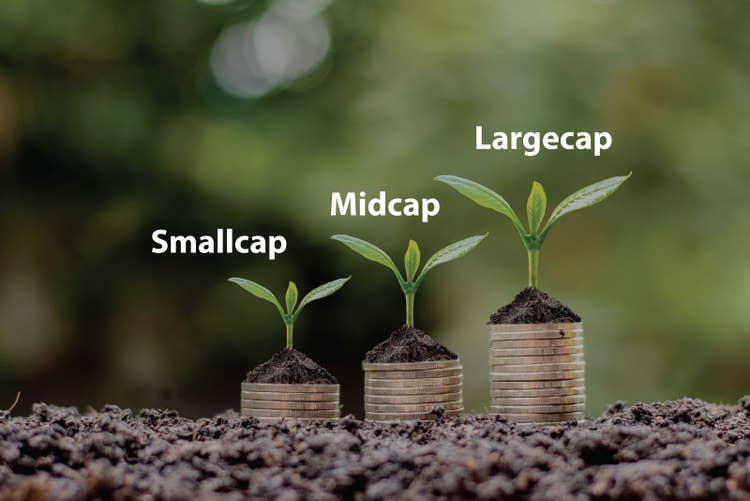
Large-cap Stocks, Small-cap Stocks, Mid-cap Stocks — What is the difference?
-
There are thousands of companies in the Indian stock market. There are about 2,113 companies listed on the NSE and 5,311 companies listed on the BSE.

-
Video
- 3 min watch
- April 4, 2022
-
As we all agree, it is not possible to time the market, and therefore a Systematic Investment Plan (or SIP) is a preferred mode of investment to invest in mutual funds.

-
Podcast
- 1 min listen
- October 4, 2021
-
Explore thought-provoking conversations with Pratik Oswal as he shares his views on building wealth, market behavior, and more.
Frequently Asked Questions